
Brockmire at Home: How Mid-Century Modern Design Tracks a Man Falling Apart—and Slowly Rebuilding
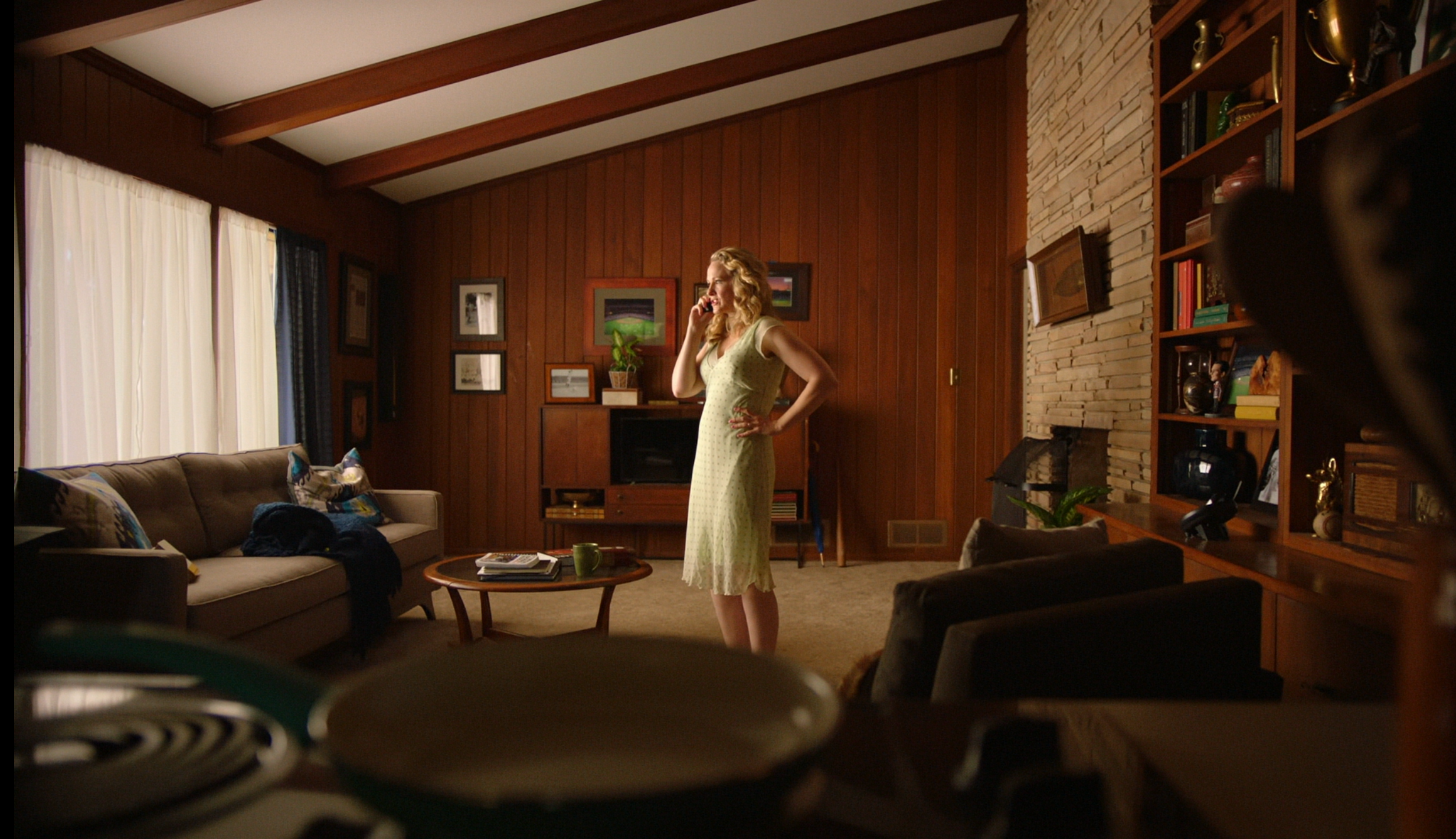
Exposed beam ceilings and stone fireplace in the ex-wife’s mid-century modern home — interior still from Brockmire (IFC / AMC Networks)
The Ex-Wife’s Mid-Century Modern Home: Order, Permanence, and What Was Lost
This is the emotional anchor of the series—even though Brockmire himself no longer lives here.
The ex-wife’s home is a textbook example of mid-century modern restraint: exposed beam ceilings, warm wood paneling, low-profile furniture, and a substantial stone fireplace that grounds the space both visually and psychologically.
From a design standpoint, everything here communicates stability:
Horizontal emphasis calms the eye
Honest materials (stone, wood) suggest permanence
Furniture sits low and intentional, encouraging conversation rather than chaos
Negative space is allowed to breathe
The fireplace, in particular, functions as more than an architectural feature—it’s the hearth of a life that once had rhythm and reliability. This is a home shaped by routine and emotional regulation, qualities Brockmire famously lacks.
Design takeaway:
Classic MCM isn’t flashy. Its power comes from proportion, material honesty, and restraint. This house doesn’t try to impress—it reassures.
Character takeaway:
This isn’t just the home Brockmire left. It’s the one he was no longer capable of maintaining.
Brockmire Season 1 Trailer
And before we forget, if you haven’t seen the show, you’ll love it if you’re a baseball fan!
Jules’ Pennsylvania House: Mid-Century as Accent, Not Identity
Interior still from Brockmire (IFC / AMC Networks)
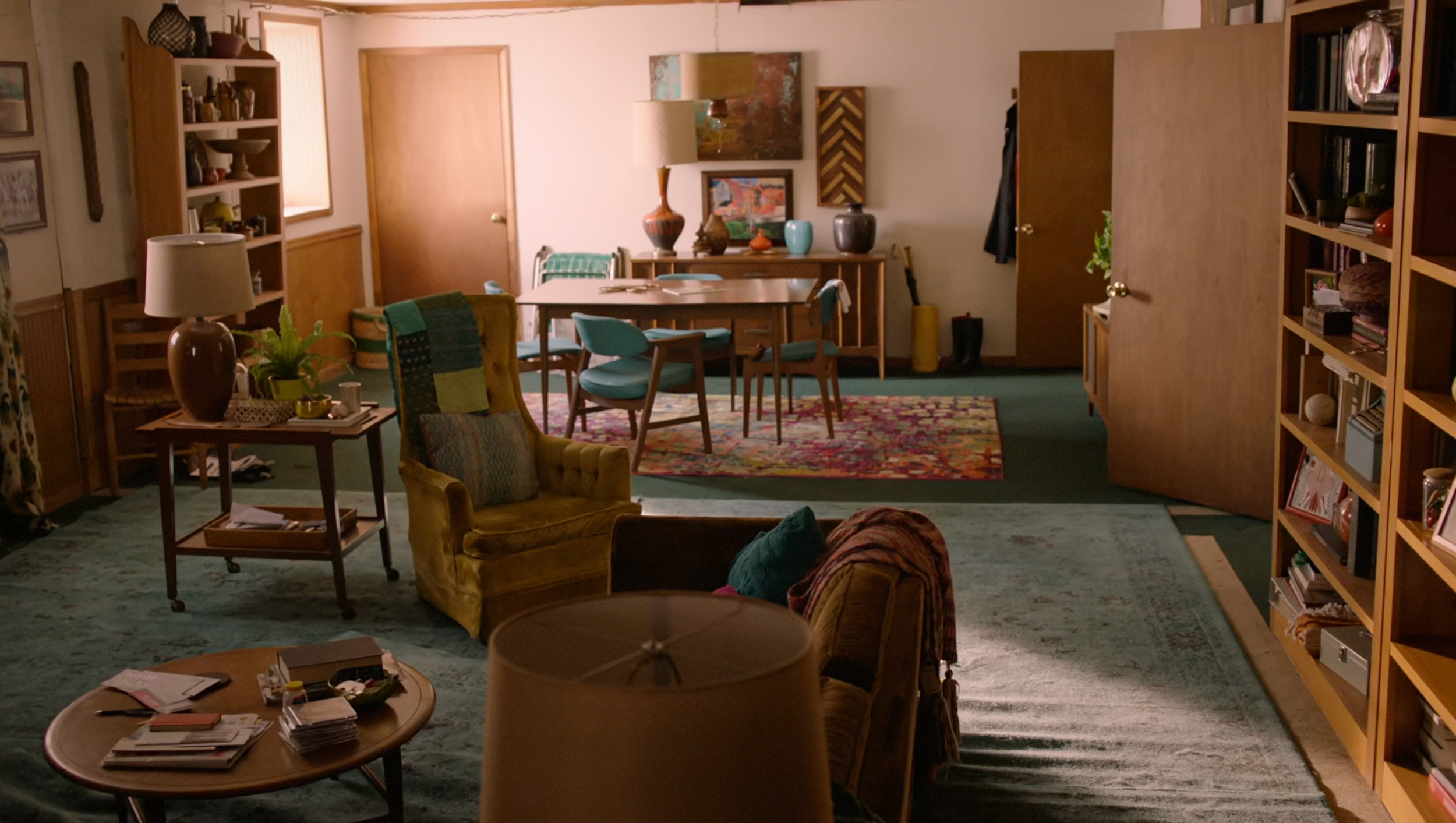
Jules’ house is one of the most interesting interiors in the series precisely because it doesn’t commit fully to a single style.
Architecturally, the home reads more traditional or transitional. But look closely—especially in the dining room—and you’ll see deliberate MCM nods:
Sculptural dining chairs with tapered legs
Warm, sculptural table lamps
A balanced vignette that feels composed, not curated
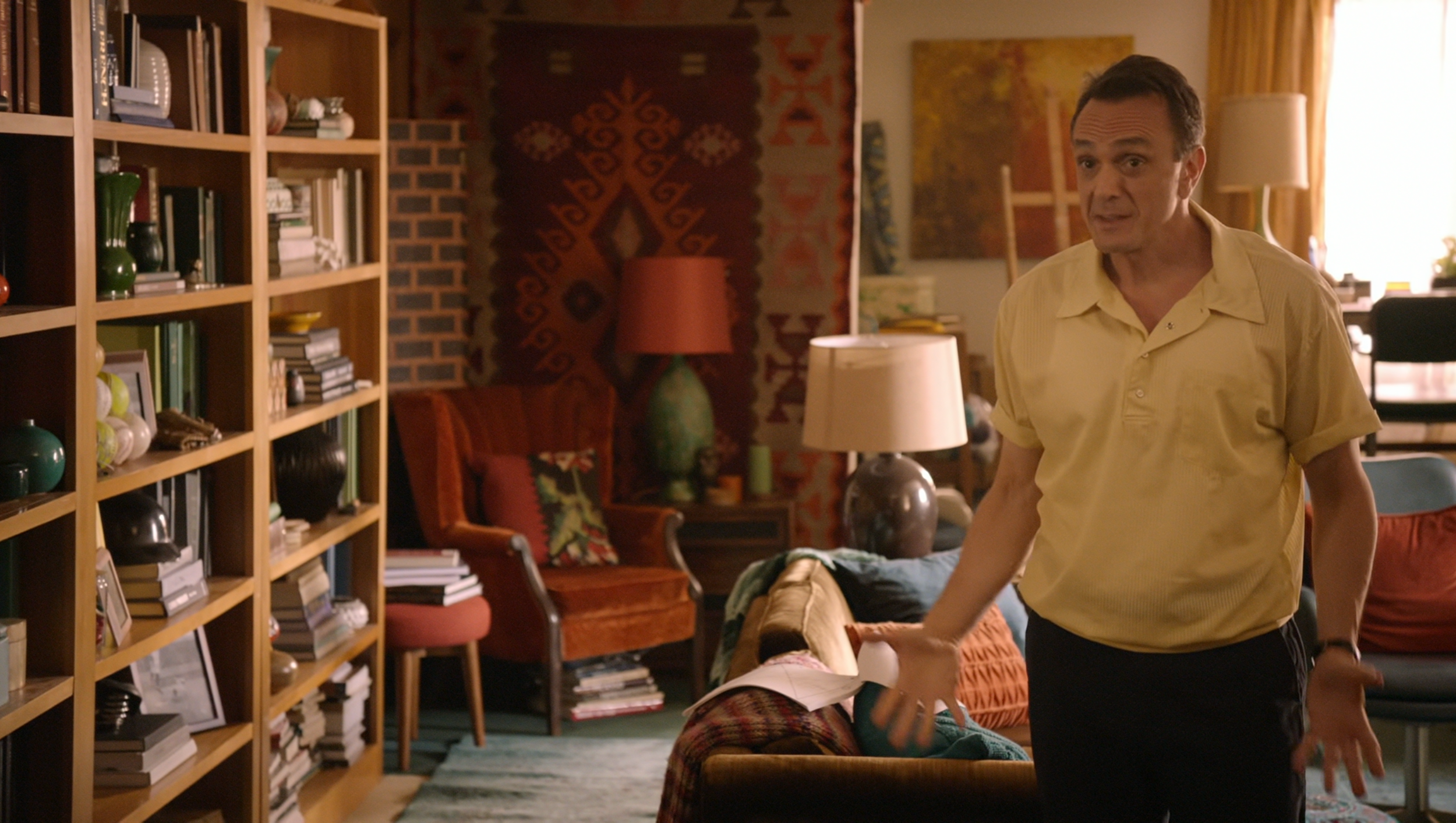
This is mid-century modern used as punctuation rather than proclamation. The furniture does the stylistic work, not the walls.
From a designer’s perspective, this is a masterclass in how little it takes to shift a room’s tone. A few well-chosen pieces create an atmosphere of taste, confidence, and emotional intelligence.
Interior still from Brockmire (IFC / AMC Networks)
Design takeaway:
You don’t need a fully MCM house to benefit from MCM principles. Thoughtful furniture choices—chairs, lamps, tables—can introduce warmth and intention without overwhelming the architecture.
Character takeaway:
Jules is grounded, observant, and emotionally literate. Her home reflects that balance—stylish, but never performative.
The Loft: Exposure, Vulnerability, and No Place to Hide
Interior still from Brockmire (IFC / AMC Networks)
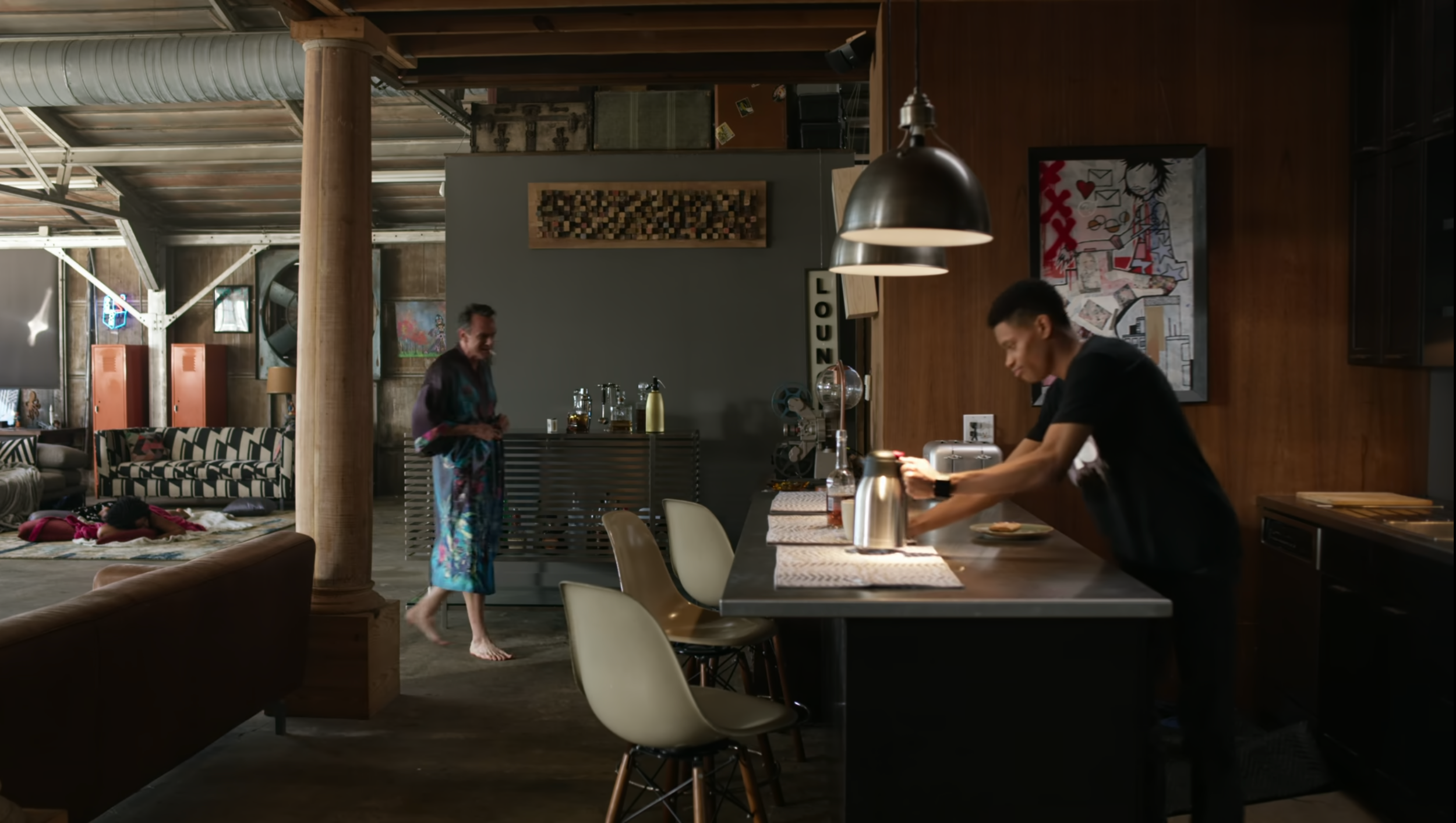
When Brockmire moves into a loft, the walls—literally and figuratively—disappear.
The space is open, industrial, and unforgiving. Structure is exposed. Ductwork is visible. Rooms bleed into one another. Any mid-century influence here shows up only in furniture scale and silhouette, not in comfort or cohesion.
From a design standpoint, lofts are honest spaces. They don’t conceal flaws, and they don’t offer emotional insulation.
Furniture floats instead of anchoring
There’s little hierarchy or privacy
Visual clutter is unavoidable
Design takeaway:
Open plans amplify emotional states. Without thoughtful zoning and anchoring elements, they can feel unmoored rather than freeing.
Character takeaway:
This is Brockmire at his most exposed—seen, judged, and unable to retreat.
The Glass-Block Era: 1980s Optimism and Overcorrection

Interior still from Brockmire (IFC / AMC Networks)
Then comes the glass-block wall.
Architecturally, glass block is fascinating—it promises light, privacy, and modernity all at once. Culturally, it screams late-’80s confidence.
In Brockmire, it reads as an overcorrection.
Compared to mid-century modern’s quiet assurance, glass block is louder, heavier, and more declarative. It’s design as statement rather than structure.
Design takeaway:
When materials become the message, subtlety is often lost. Not every moment of reinvention needs architectural exclamation points.
Character takeaway:
Brockmire mistakes momentum for healing. The house looks forward, but without reflection.
Transitional Comfort: Safe, Pleasant, and Emotionally Neutral

Interior still from Brockmire (IFC / AMC Networks)
This phase is defined less by what stands out and more by what doesn’t.
The transitional home is comfortable, inoffensive, and forgettable. Neutral palettes, familiar layouts, softened lines. Any MCM influence has been diluted into general pleasantness.
Design takeaway:
Transitional design excels at smoothing edges—but it rarely tells a story.
Character takeaway:
Brockmire is surviving here, not transforming. This is emotional maintenance mode.
The Modern Industrial Unit: Integration at Last
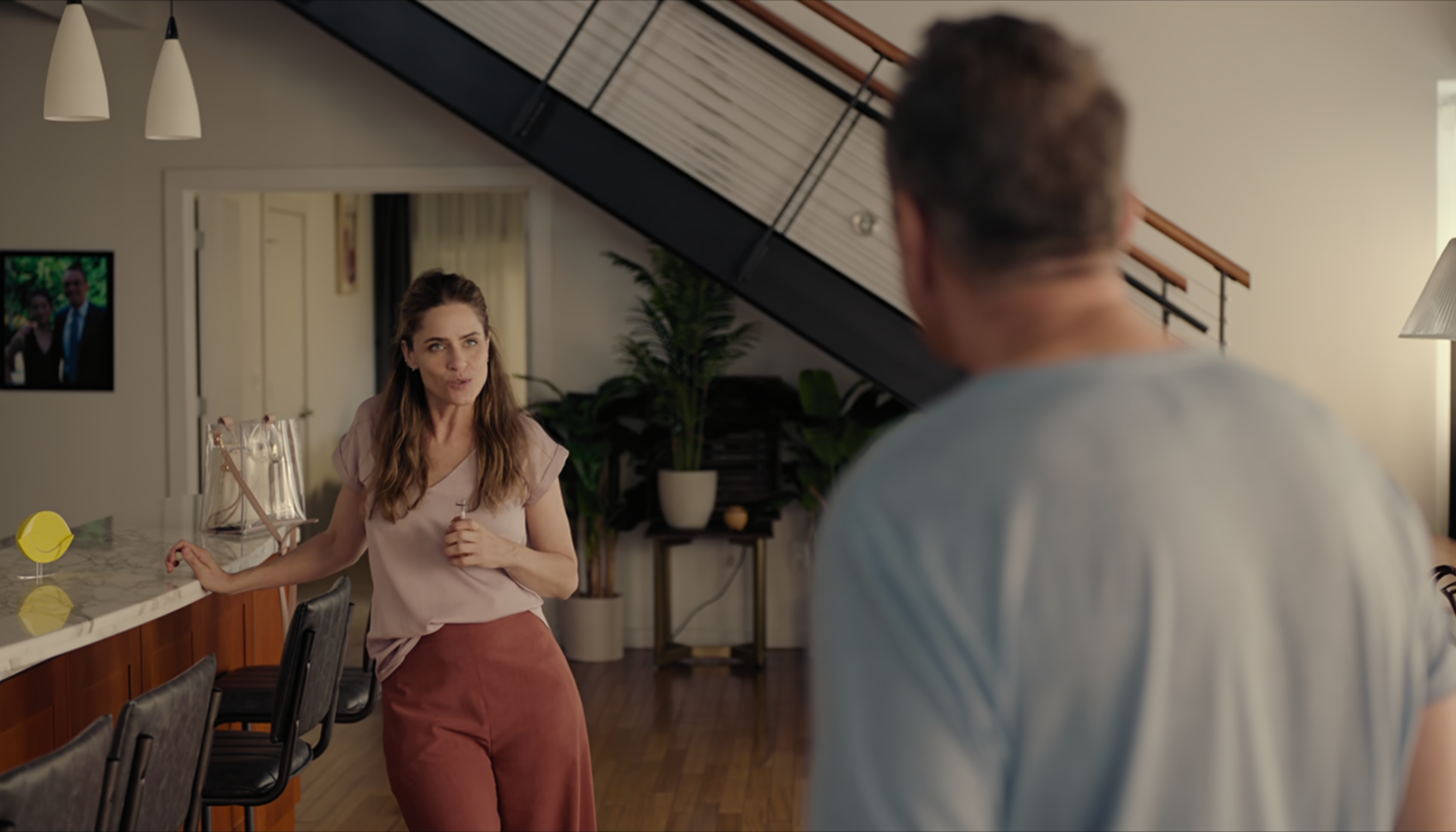
Interior still from Brockmire (IFC / AMC Networks)
By the time Brockmire lands in a modern unit with an industrial staircase, something finally clicks.
This space mixes:
Modern restraint
Transitional warmth
Industrial honesty
Steel and wood coexist. Clean lines are softened by texture. The staircase becomes a sculptural element—functional, visible, unapologetic.
Mid-century modern lives on here, not as nostalgia, but as principle: proportion, clarity, and intention.
Design takeaway:
The most successful interiors don’t erase contradictions—they organize them.
Character takeaway:
This is Brockmire accepting who he is, not pretending to be someone else.
Why the Design Works: Architecture as Emotional Editing
Brockmire never announces character growth. It shows it through space.
Mid-century modern in Brockmire doesn’t function as a scorecard for emotional health. Instead, it’s used as a point of contrast. Early on, Brockmire occupies or passes through well-composed, mid-century-leaning spaces that belong to other people — homes defined by balance and intention that only emphasize how unmoored he is. As the series progresses, the interiors become less about borrowing someone else’s order and more about Brockmire shaping spaces that reflect who he actually is. The design evolves from idealized calm to livable honesty.
Final Thoughts: What Brockmire Teaches Us About Homes and Identity
Great production design doesn’t distract. It clarifies.
The interiors of Brockmire remind us that homes don’t just reflect who we are—they reveal who we’re becoming. Mid-century modern, at its best, isn’t a style. It’s a framework for living with honesty, restraint, and proportion.
And sometimes, the quietest rooms tell the loudest stories.